

Major IPCC workshops bring diverse climate voices to Reading
29 January 2026
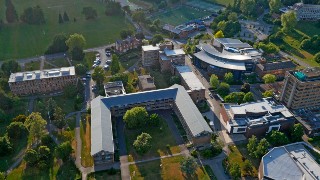
The Intergovernmental Panel on Climate Change (IPCC) will host two major international workshops at the University of Reading in February 2026.
The closed workshops, held at the University of Reading in collaboration with the Department for Energy Security and Net Zero and the Met Office, will run from 10 to 12 February and will help to make IPCC reports more inclusive and robust.
The first workshop will examine how to better include diverse knowledge systems in IPCC work. This means exploring how indigenous, local, and practitioner knowledge can work alongside scientific research to create more complete climate assessments.
The second workshop will focus on improving assessment methods. This includes exploring how artificial intelligence and machine learning can help climate scientists review huge amounts of research more efficiently, as well as better techniques for evaluating climate action and policies.
The workshops will produce recommendations for consideration by authors working on the entire set of IPCC reports planned for the seventh assessment cycle.
Prof Sir Jim Skea, Chair of the IPCC said: “The outcomes and recommendations of the two scientific workshops will provide critical guidance for the IPCC leadership and authors working on the next IPCC assessment. The guidance will help them assess the ever-growing body of climate literature and engage with wider forms of knowledge, including that by Indigenous Peoples and local communities. The University of Reading has been a generous host and a genuine partner in this effort.”
Professor Robert Van de Noort, Vice-Chancellor of the University of Reading, said: "The University of Reading has one of the largest clusters of climate scientists in the world and a global reputation for excellence in climate research. Hosting these IPCC workshops reflects our expertise and our commitment to advancing climate knowledge. We're bringing together diverse voices from across the planet to strengthen how we understand and respond to the climate challenge. This collaboration is exactly what's needed to make real progress."
Minister for Climate, Katie White, said:“These workshops bring together world‑leading scientists to strengthen the IPCC’s assessments - the foundation for climate action over the next decade.
"The University of Reading, the Met Office and the UK Government are proud to host this work, demonstrating the UK’s scientific leadership in action as we tackle the climate challenge head-on.”
Professor Rowan Sutton, Director of Met Office Hadley Centre and Professor of Climate Science, University of Reading said: “The Met Office is proud to be supporting Reading University to bring together these important workshops on indigenous knowledge and artificial intelligence. Effective climate action must be based on robust and up to date scientific evidence. The IPCC plays the central role in ensuring this evidence is gathered, assessed and made available to policy makers around the world. The Met Office is proud to have six lead authors in the current assessment cycle, highlighting our role as a global leader in climate science and our commitment to the IPCC process.”
Pre-workshop events
On Monday 9 February, the University of Reading will host three events offering a rare opportunity to understand how the world's leading climate science body works.
An afternoon introduction (2:00pm - 3:00pm) will inform invited guests, including many early career researchers, about pathways to getting involved in the IPCC. Business owners and decision-makers invited to a subsequent session, running from 4:00pm-5:30pm, will be informed how they can make use of IPCC reports and findings.
The day concludes with a high-level public lecture and panel discussion (6:00-7:30pm) led by IPCC Chair ProfessorSirJim Skea, which will explain what the IPCC does and how it functions. The session will also highlight the key scientific questions in the current report cycle and the objectives of the two workshops.
Members of the public can register to attend the evening lecture in person or online: Inside the Intergovernmental Panel on Climate Change: How Global Science Supports Our Future Climate
Notes to editors:
Contact the University of Reading Press Office on 0118 378 5757 or pressoffice@reading.ac.uk.
What is the IPCC?
The Intergovernmental Panel on Climate Change (IPCC) is the UN body for assessing the science related to climate change. It was established by the United Nations Environment Programme (UNEP) and the World Meteorological Organization (WMO) in 1988 to provide political leaders with periodic scientific assessments concerning climate change, its implications and risks, as well as to put forward adaptation and mitigation strategies. In the same year the UN General Assembly endorsed the action by the WMO and UNEP in jointly establishing the IPCC. It has 195 member states.
Thousands of people from all over the world contribute to the work of the IPCC. For the assessment reports, experts volunteer their time as IPCC authors to assess the thousands of scientific papers published each year to provide a comprehensive summary of what is known about the drivers of climate change, its impacts and future risks, and how adaptation and mitigation can reduce those risks.
The IPCC has three working groups: Working Group I, assessing the physical science basis of climate change; Working Group II, assessing impacts, adaptation and vulnerability; and Working Group III, assessing the mitigation of climate change. It also has a Task Force on National Greenhouse Gas Inventories that develops methodologies for measuring emissions and removals.
IPCC assessments provide governments, at all levels, with scientific information that they can use to develop climate policies. IPCC assessments are a key input into the international negotiations to tackle climate change. IPCC reports are drafted and reviewed in several stages, thus guaranteeing objectivity and transparency.
About the Seventh Assessment Cycle
Comprehensive scientific assessment reports are published every 5 to 7 years. The IPCC is currently in its seventh assessment cycle, which formally began in July 2023 with the elections of the new IPCC and Taskforce Bureaus at the IPCC’s Plenary Session in Nairobi.
At its first Plenary Session in the seventh assessment cycle – the 60th Plenary Session in Istanbul, Türkiye, in January 2024 – the Panel agreed to produce in this cycle the three Working Group contributions to the Seventh Assessment Report (AR7), namely the Working Group I report on the Physical Science Basis, the Working Group II report on Impacts, Adaptation and Vulnerability and the Working Group III report on Mitigation of Climate Change. The Synthesis Report of the Seventh Assessment Report will be produced after the completion of the Working Group reports and released by late 2029.
The Panel decided already during the previous cycle to produce a Special Report on Climate Change and Cities and a Methodology Report on Short-lived Climate Forcers during AR7. Scientists have also been asked to deliver a Methodology Report on Carbon Dioxide Removal Technologies, Carbon Capture Utilization and Storage. At the 61st Session, the Panel agreed upon the outlines for the Special Report on Climate Change and Cities scheduled for approval and publication in March 2027 and for the 2027 IPCC Methodology Report on Inventories for Short-lived Climate Forcers scheduled for publication in the second half of 2027.
In addition, a revision of the 1994 IPCC Technical Guidelines on impacts and adaptation as well as adaptation indicators, metrics and guidelines, will be developed in conjunction with the Working Group II report and published as a separate product.
During its 62nd Plenary Session held in Hangzhou, China, in February 2025, the Panel has agreed on the outlines of the three Working Group contributions to the Seventh Assessment Report (AR7).
At the Panel’s most recent Plenary Session in Lima, Peru, in October 2025, member governments agreed on the scientific content of the Methodology Report on Carbon Dioxide Removal Technologies, Carbon Capture, Utilization and Storage. There, the Panel also agreed on the 2026 workplan for the three Working Group contributions to the Seventh Assessment Report.
IPCC’s latest report, the Sixth Assessment Report, was completed in March 2023 with the release of its Synthesis Report, which provided direct scientific input to the First Global Stocktake process under the United Nations Framework Convention on Climate Change at COP28 in Dubai.
For more information, please contact:
IPCC Press Office, email: ipcc-media@wmo.int
About the University of Reading:
Founded in 1926, the University of Reading is celebrating its centenary. Today, it is among the top 30 UK universities and is home to more than 27,000 students from over 160 countries.
The University is proudly committed to tackling climate change through its world-leading research and promoting environmental sustainability across its campuses and beyond.
Reading was named Sustainable University of the Year 2025 in The Times and The Sunday Times Good University Guide 2025 and is ranked 4th in the People and Planet University League Table.
We contributed the largest number of scientists to the first working group of the latest IPCC assessment report, published in summer 2021, and three more experts from the University of Reading will contribute to the IPCC’s Seventh Assessment Report.
Learn more about the University of Reading.
About the Met Office
The Met Office is the UK’s National Meteorological Service, providing 24x7 world-renowned scientific excellence in weather, climate and environmental forecasts and severe weather warnings for the protection of life and property. www.metoffice.gov.uk
The Met Office Hadley Centre for Climate Science and Services provides world-class guidance on the science of climate change and is the primary focus in the UK for climate science. Its work is, in part, funded by DSIT (Department for Science Innovation and Technology) and supports the work of DESNZ (Department for Energy Security and Net Zero) and other UK Government departments.
Loading additional items please wait....
mask