
  • Schools and departments
  • Henley Business School
  • University of Reading Malaysia
  • Applicants
  • Student
  • Staff
  • Alumni
  • Local Community
Show/Hide navigation
University of Reading University of Reading
Mobile search categories
  • Study and life
  • Research
  • About us
  • Contact us
  • View courses
  • Home
  • Study and life
    • Study
    • Student life
    • Accommodation
    • Open Days and visiting
    • International students
  • Research
    • Research themes
    • Impact
    • Innovation and partnerships
    • Research environment
    • Get involved
  • About us
    • Business
    • Our global community
    • Local community
    • Visit us
    • Strategy
    • Governance
  • Contact us
  • Applicants
  • Student
  • Staff
  • Alumni
  • Local Community
  • Schools and departments
  • Henley Business School
  • University of Reading Malaysia
  • View courses

‘Oldest octopus’ fossil is no octopus at all, scans reveal

08 April 2026
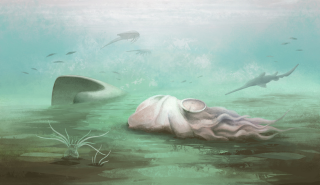
Pohlsepia mazonensis sketchA famous 300-million-year-old fossil that was thought to be the world's oldest octopus – even featuring in the Guinness Book of Records – has turned out to be something else altogether.

In what amounts to a case of mistaken identity, the fossil hid its true nature through decay 300 million years ago, before being fossilised.

Using the latest synchrotron imaging to search inside the fossil rock, researchers discovered tiny teeth preserved inside the rock that prove that Pohlsepia mazonensis is not an octopus at all, but an animal related to a modern Nautilus – a multi-tentacled animal with an external shell. Pohlsepia mazonensis
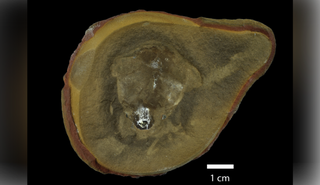
This revelation, shared today (Wednesday, 8 April 2026) in the journal Proceedings of the Royal Society B, solves a long-running puzzle in the understanding of octopus evolution that has confused scientists for decades. It also provides evidence of the oldest nautiloid soft tissue preservation known in the fossil record and means that the record-holding 'oldest octopus’ should be quietly written out of the Guinness Book of Records.

Dr Thomas Clements, lead author and Lecturer in Invertebrate Zoology at the University of Reading, said: "It turns out the world's most famous octopus fossil was never an octopus at all. It was a nautilus relative that had been decomposing for weeks before it became buried and later preserved in rock, and that decomposition is what made it look so convincingly octopus-like.

“Scientists identified Pohlsepia as an octopus 25 years ago, but using modern techniques showed us what was beneath the surface to the rock, which finally cracked the case. We now have the oldest soft tissue evidence of a nautiloid ever found, and a much clearer picture of when octopuses actually first appeared on Earth.

"Sometimes, reexamining controversial fossils with new techniques reveals tiny clues that lead to really exciting discoveries.”

Cold case X-ray

Found in Illinois, USA, the first analysis of the fossil was published in 2000 and was later used in studies of how octopuses and their relatives evolved. Scientists thought the fossil showed eight arms, fins, and other features typical of an octopus, pushing back the known history of octopuses by around 150 million years.
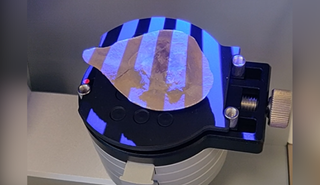
Pohlsepia mazonensis being scannedDoubts had been raised about the identification for years, but without a clear way to test them until recently. The scientists in the new study used synchrotron imaging – a technique that uses beams of light brighter than the sun – to scan for structures invisible to the eye beneath the surface, revealing hidden details inside the rock. The scientists likened the process to giving a 300-million-year-old suspect a modern forensic examination.

What they found was a radula, a ribbon-like feeding structure with rows of teeth only found in molluscs. With at least 11 tooth-like elements per row, the shape and number ruled out an octopus entirely. Octopuses have seven or nine, while nautiloids have 13.

The teeth matched those of a fossil nautiloid called Paleocadmus pohli, already known from the same site where it was found, and the researchers concluded the animal had partially rotted before fossilisation, causing it to look very different from its true self.

Octopus origins pushed back

The Nautilus is a shelled sea creature still alive today, with its ancient origins leading some to describe it as a “living fossil”. The Paleocadmus fossils found at the Mazon Creek site in Illinois now represent the oldest known nautiloid soft tissue in the fossil record – beating the previous record by around 220 million years.

These findings change the picture of when octopuses first evolved. The data now supports octopuses appearing much later, during the Jurassic period. Scientists now believe the split between octopuses and their ten-armed relatives such as squids happened in the Mesozoic era, not hundreds of millions of years earlier as previously thought.

Dr Clements said: “It's amazing to think a row of tiny hidden teeth, hidden in the rock for 300 million years, have fundamentally changed what we know about when and how octopuses evolved."

Download high-resolution multimedia assets : Google Drive - Pohlesepia mazonensis images and video

Thomas Clements, Imran Alexander Rahman, Alan R. T. Spencer, Christian Klug, Dirk Fuchs, Isabelle Rouget, Isabelle Kruta, Sebastian Schöder, Jack Wittry, Orla G. Bath Enright, Pierre Gueriau; Synchrotron data reveal nautiloid characters in Pohlsepia mazonensis, refuting a Palaeozoic origin for octobrachians. Proc Biol Sci 1 April 2026; 293 (2068): 20252369. https://doi.org/10.1098/rspb.2025.2369

Loading additional items please wait....

Main Menu


Latest News

Contact the press team

Expert spokespeople

Media, demonstrations, and petitions on campus

Connecting Research Blog

Events

Media Enquiries


Journalists can contact the press office at any time.

+44 (0)118 378 5757 (24 hours)

pressoffice@reading.ac.uk

News Archives


News from 2026

News from 2025

News from 2024

News from 2023

News from 2022

News from 2021

News archive 1998-2020

mask
Choose a subject
2026/27
2027/28
Undergraduates
Postgraduates
Undergraduates
Postgraduates

Subjects A-B

  • Accounting
  • Acting and Drama
  • Agriculture
  • Ancient History
  • Anthropology
  • Archaeology
  • Architectural Engineering
  • Architecture
  • Art
  • Biochemistry
  • Biological Sciences
  • Biomedical Engineering
  • Biomedical Sciences
  • Bioveterinary Sciences
  • Building and Surveying
  • Business and Management

Subjects C-E

  • Chemistry
  • Classics and Classical Studies
  • Climate Science
  • Computer Science
  • Construction Management
  • Consumer Behaviour and Marketing
  • Creative Writing
  • Criminology
  • Digital Media and Communication
  • Ecology
  • Economics
  • Education
  • Engineering
  • English Language and Applied Linguistics
  • English Literature
  • Environment

Subjects F-G

  • Film & Television
  • Finance
  • Food
  • Foundation programmes
  • French
  • Geography
  • German
  • Global Sustainable Development
  • Graphic Communication and Design

Subjects H-M

  • Healthcare
  • History
  • International Foundation Pathways
  • International Relations
  • Italian
  • Languages and Cultures
  • Law
  • Linguistics
  • Marketing
  • Mathematics
  • Medical Sciences
  • Meteorology and Climate
  • Microbiology
  • Museum Studies

Subjects N-T

  • Nutrition
  • Pharmacology
  • Pharmacy
  • Philosophy
  • Physician Associate Studies
  • Politics and International Relations
  • Psychology
  • Real Estate and Planning
  • Sociology
  • Spanish
  • Speech and Language Therapy
  • Surveying and Construction Management
  • Teaching
  • Theatre & Performance

Subjects U-Z

  • Wildlife Conservation
  • Zoology

Subjects A-C

  • Accounting
  • Agriculture
  • Ancient History
  • Archaeology
  • Architecture
  • Art
  • Artificial Intelligence
  • Biological Sciences
  • Biomedical Sciences
  • Business (Post-Experience)
  • Business and Management (Pre-Experience)
  • Classics
  • Climate Science
  • Computer Science
  • Construction Management and Engineering
  • Consumer Behaviour
  • Creative Enterprise

Subjects D-G

  • Data Science
  • Dietetics
  • Digital Business
  • Ecology
  • Economics
  • Education
  • Energy and Environmental Engineering
  • Engineering
  • English Language and Applied Linguistics
  • English Literature
  • Environmental Sciences
  • Film, Theatre and Television
  • Finance
  • Food and Nutritional Sciences
  • Geography and Environmental Science
  • Graphic Design

Subjects H-P

  • Healthcare
  • History
  • Information Technology
  • International Development and Applied Economics
  • Law
  • Linguistics
  • Management
  • Marketing
  • Meteorology and Climate
  • Microbiology
  • Nutrition
  • Pharmacy
  • Philosophy
  • Physician Associate
  • Politics and International Relations
  • Project Management
  • Psychology
  • Public Policy

Subjects Q-Z

  • Real Estate and Planning
  • Social Policy
  • Speech and Language Therapy
  • Strategic Studies
  • Teacher training
  • Theatre
  • Typography and Graphic Communication
  • War and Peace Studies
  • Zoology

Subjects A-B

  • Accounting
  • Acting and Drama
  • Agriculture
  • Ancient History
  • Anthropology
  • Archaeology
  • Architectural Engineering
  • Architecture
  • Art
  • Biochemistry
  • Biological Sciences
  • Biomedical Engineering
  • Biomedical Sciences
  • Bioveterinary Sciences
  • Building and Surveying
  • Business and Management

Subjects C-E

  • Chemistry
  • Classics and Classical Studies
  • Climate Science
  • Computer Science
  • Construction Management
  • Consumer Behaviour and Marketing
  • Creative Writing
  • Criminology
  • Digital Media and Communication
  • Ecology
  • Economics
  • Education
  • Engineering
  • English Language and Applied Linguistics
  • English Literature
  • Environment

Subjects F-G

  • Film & Television
  • Finance
  • Food
  • Foundation programmes
  • French
  • Geography
  • German
  • Global Sustainable Development
  • Graphic Communication and Design

Subjects H-M

  • Healthcare
  • History
  • International Foundation Pathways
  • International Relations
  • Italian
  • Languages and Cultures
  • Law
  • Linguistics
  • Marketing
  • Mathematics
  • Medical Sciences
  • Meteorology and Climate
  • Microbiology
  • Museum Studies

Subjects N-T

  • Nutrition
  • Pharmacology
  • Pharmacy
  • Philosophy
  • Physician Associate Studies
  • Politics and International Relations
  • Psychology
  • Real Estate and Planning
  • Sociology
  • Spanish
  • Speech and Language Therapy
  • Surveying and Construction Management
  • Teaching
  • Theatre & Performance

Subjects U-Z

  • Wildlife Conservation
  • Zoology

We are in the process of finalising our postgraduate taught courses for 2027/28 entry. In the meantime, you can view our 2026/27 courses.

  • Charitable Status
  • Accessibility
  • Privacy Policy
  • Cookie preferences
  • Terms of use
  • Sitemap

© University of Reading