

Putting communities in the research driving seat
Learn how the Community Led Research Pilot paves the way for future community-led research
12 February 2026

What happens when communities don’t just “take part” in research but lead it? An independent evaluation of the University of Reading’s Community Led Research Pilot (CLRP) shows that when communities are trusted to shape research on their own terms, the results are more relevant, more ethical and more likely to deliver real-world impact.
The CLRP was a three-year partnership between the University of Reading and the British Science Association (BSA), funded by UK Research and Innovation (UKRI). It supported six community organisations in Reading and Slough in designing and leading their own research projects, working alongside academic researchers.
The programme was led by Associate Professor Dr Sally Lloyd Evans and Senior Research Fellow Dr Alice Mpofu-Coles, working together with the Participatory Action Research (PAR) team at the University of Reading.
The evaluation explores the strengths and benefits of the Pilot, while setting out key recommendations to pave the way for future community-led research.
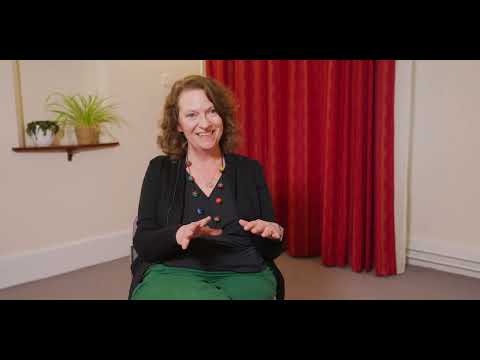
Dr Sally Lloyd-Evans, Public Engagement with Community Research Fellow at the University of Reading, said: “This pilot showed us what’s possible when we start from trust and share power. When communities are supported to lead research on their own terms, the work becomes richer, more ethical and far more likely to create real change. The challenge now is for institutions and funders to adapt, so community-led research isn’t the exception, but the norm.”
Tirza Meinema, Co-Founder & Chair of Slough Anti-Litter Society, commented on the experience, saying: “[This project] has changed my opinion about community research. It is showing how important it is to have research that you can directly implement and use within your community group. Not research that is just done and lying on a shelf somewhere and nothing gets done afterwards. This is research that we literally put into practice straight away, which shows you how important that sort of research is.”
Dr Steve Scott, UKRI Public Engagement Lead, said: “We’re delighted to share the outputs from this programme and the lessons learned. These projects in Reading and Slough have emphasised the value of funding communities to lead their own research - from generating new scientific knowledge to building skills in both researchers and communities to improving wellbeing and cultural identity.”
The projects explored themes including environmental action, belonging and identity, and wellbeing – with communities deciding the focus and developing their own research questions.
An independent evaluation by the Scottish Community Development Centre found the pilot was successful and generated valuable learning for everyone involved. Across projects, relationship-building emerged as a core strength: communities and researchers reported high levels of trust, mutual respect and learning. However, the time required to build these relationships was often underestimated.
Knowledge generation was a clear success, with communities producing valuable, locally relevant insights and developing research skills and confidence; however, clarity around ownership of research data, credit and sharing of outputs was uneven.
The pilot also prompted reflection and learning within institutions, highlighting how existing internal systems can unintentionally hinder participatory work. While long-term impact will take time to evidence, the evaluation identifies early benefits for communities, researchers and partners, alongside a shared recognition that sustained support is essential if community-led research is to thrive.
Community groups gained new research skills, including designing research questions, collecting data, and using participatory and creative methods to explore issues relevant to their own lives. Many participants reported that they had been “doing research and never called it that,” and through the pilot came to recognise themselves as legitimate knowledge‑creators, which increased their confidence and sense of agency as community researchers.
Academic researchers also reported substantial learning from doing PAR directly in community settings. They highlighted the importance of recognising that communities hold expertise about their own issues, and that co‑creation strengthens both the quality and impact of research. The pilot demonstrated how PAR can improve trust, build relationships, and support broader institutional goals such as widening participation and enhancing the social relevance of research.
The report sets out clear recommendations to strengthen future community-led research programmes. It calls for greater clarity from the outset on roles, responsibilities and expectations, supported by shared frameworks that can adapt as projects evolve. More realistic timescales are needed to allow trust-building, co-design and meaningful participation, alongside flexible, sufficient funding that reflects the realities of community-based work.
The evaluation highlights the need for institutional systems to change, including simpler and more accessible processes for payments, contracting, ethics approval and intellectual property, so community partners are not disadvantaged. It also recommends stronger training and support, co-designed with communities, including learning on power, anti-oppressive practice and participatory methods. Finally, the report emphasises planning for legacy and sustainability from the start, ensuring that outcomes, skills and relationships endure beyond the life of a pilot and continue to benefit communities on their own terms.
The CLRP shows that when communities are trusted to lead, research becomes more relevant, ethical, and impactful. Community-led approaches can generate valuable knowledge, build confidence and skills, and strengthen relationships between universities and the places they serve. But the Pilot also demonstrates that this work cannot succeed on goodwill alone. If community-led research is to move from pilot projects to standard practice, funders and institutions must adapt by creating flexible funding combined with secure employment contacts, realistic timelines and systems that work for community partners, not against them. With the right support in place, community-led research offers a powerful route to research that is grounded in lived experience, responsive to local need, and capable of delivering lasting social change.
The full Evaluation Report and Executive Summary are now available, alongside two blogs by the PAR team reflecting on ethics and lessons learned from the Pilot, as well as a funder's reflections blog from UKRI.
Each community group also co-produced a range of outcomes – including videos, case studies, research findings, and practical tools and resources. To explore the evaluation resources and community project outputs, read more about the Community Led Research Project Evaluation.