
Homemade compost 'supercharges’ garden plant growth
24 July 2025
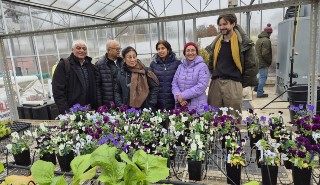 A Nepalese community gardening group has been working with scientists from the University of Reading to investigate if their homemade compost is better than shop-bought alternatives for producing bigger, healthier plants in a shorter space of time.
The project was a research partnership between the University and the Integrated Research Development Centre (IRDC), which works with underrepresented communities in Reading, with a particular focus on the Nepalese community.
The research found that mustard plants grown in two composts, created from kitchen and garden waste by the IRDC's community gardening group, yielded superior results compared to those grown in four different peat-free composts, purchased from supermarkets and garden centres.
Mustard leaves are commonly grown and eaten by the Nepalese community. They are a great source of vitamins A, C, and K, as well as calcium, fibre and antioxidants. For the purposes of comparison, violas and petunias also formed part of the experiment.
The plants grown in the homemade composts developed more rapidly, produced larger flowers and leaves, and exhibited stronger root systems. .jpg?h=2480&w=3508&hash=104AD180DA03B5EDE34E47F6F2CE2A00)
Dr Deepti Angra, from the Department of Crop Science at the University of Reading, who led the project, said: "This research confirms what many gardeners have long suspected, that carefully prepared homemade compost can be a better medium to supercharge plant growth, compared to commercial products.
“The nutrient composition analysis showed our community-made compost was at least comparable, if not better than store-bought options, as it exhibits higher concentrations of micronutrients. This ensures soil enrichment which better supports the growing plants.”
The initial trial was conducted with the plants grown indoors in glasshouses over the winter. The experiment was repeated again this summer, with some plants grown outside in the University’s grounds to replicate normal growing conditions. The results in both experiments showed the same positive results for the homemade composts.
The next step in the study is to analyse the nutritional content of the leaves of the mature plants to determine whether the use of homemade compost has any measurable impact on health when eaten.
The research was conducted as part of the Community-Led Research Pilot (CLRP), co-created by the University of Reading and the British Science Association, and funded by UK Research & Innovation and the University of Reading.
Promoting the benefits of gardening
This research project shows how community-led research can address local needs. Through the project, community members learned to create two types of compost: one from wooden chips and garden waste, the other from kitchen waste, with both showing excellent growing capabilities.
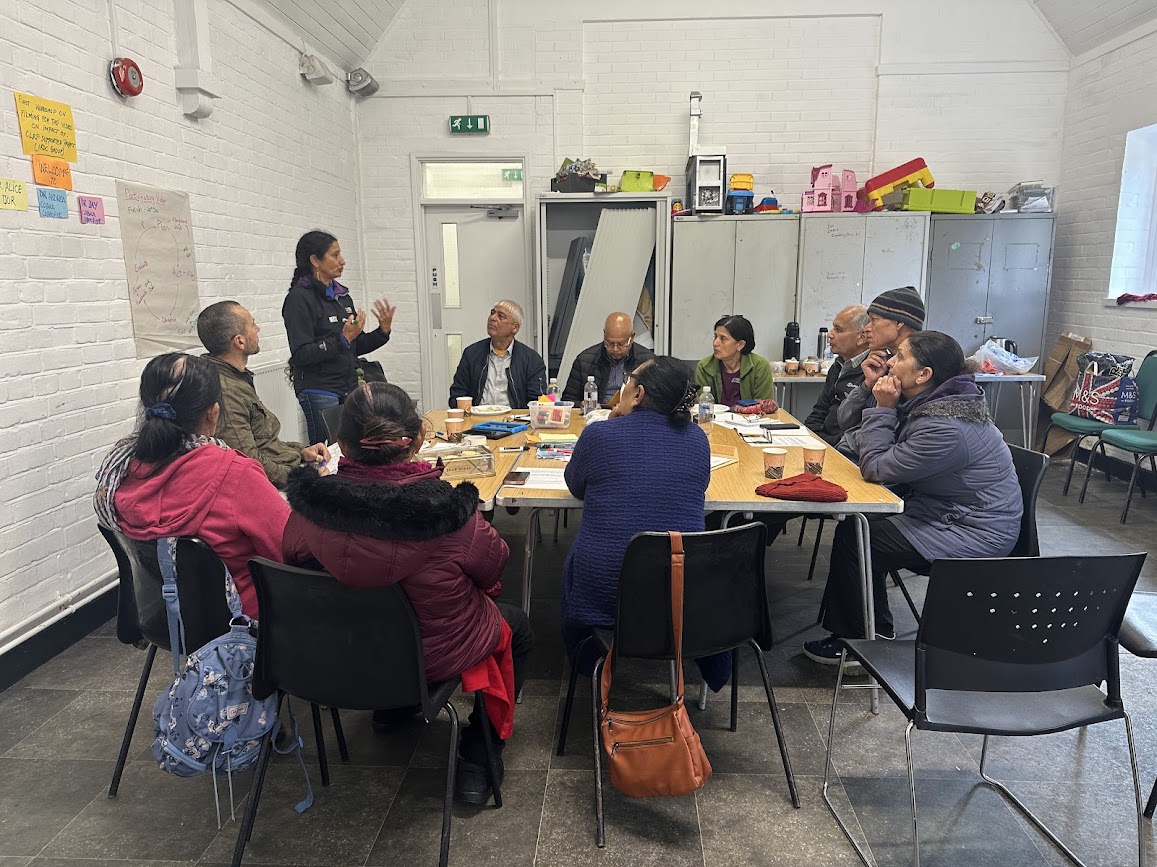 As the project has progressed, more Nepalese gardening group members participated in University workshop meetings, and additional households expressed interest in joining, seeking guidance on horticultural and sustainable gardening practices.
Krishna Neupane, Chair of the IRDC and experienced horticulturist said: "This research has empowered our Nepalese community group to be personally involved in their own waste management and food production. The scientific evidence supporting our homemade compost practices gives confidence to households wanting to make more sustainable, more affordable choices."
James Hadley, Senior Technician at the University of Reading, said: "Growing food at home or at the allotment, in people’s gardens and window boxes, is getting more and more popular.
“It has been a great joy to work on this project with people with clear enthusiasm for horticulture, and being able to scientifically back up what many of them already suspected, that their own home-made compost gives plants the best start.”
Following on from this project, the IRDC would like to continue its work to improve biodiversity and assess nutritional value of different plant species, with wider health benefits to people in the region. The group also aims to make gardening initiatives more inclusive by securing funding to support retired and disabled community members, as well as new settlers.
Dr Angra said: “The University will continue to support this community-led research initiative, which has shown the value of breaking down barriers between academic institutions and local communities.
“This collaborative approach proves that positioning communities at the heart of research produces results that are both scientifically valuable and socially transformative.
"The CLRP project, delivered in partnership with the IRDC, has been actively supported by Dr Alice Mpofu-Coles, Senior Research Fellow, and Dr Sally Lloyd-Evans, both leading academics from the Department of Geography and Environmental Science at the University of Reading. Their expertise and ongoing commitment to participatory action research at Reading have been instrumental in shaping the project’s direction and community impact."
Loading additional items please wait....
mask