Join our live webinar: How to make your portfolio stand out

Students reviewing artwork

Thursday 19 November 2026, 16:00–17:00

Discover what makes a strong portfolio with expert tips and guidance from our Art and Graphics academics. Book your place and feel confident about your university application.

Book now

As part of the application process for the following undergraduate Art courses,  eligible candidates will need to provide a digital portfolio of their work:

  • BA Fine Art (3 years)
  • BA Art (4 years)
  • BA Art and Creative Writing
  • BA Art and English Literature
  • BA Art and Graphic Design
  • BA Art and Film
  • BA Art and History of Art
  • BA Art and Philosophy
  • BA Art and Psychology

Application
​

Once you have submitted your application through UCAS, it will be reviewed by our Admissions Team, who will consider your overall academic performance alongside your personal statement and reference. If your application meets our initial selection criteria, you will receive an email inviting you to submit a digital portfolio of your work. 

Digital portfolio guidelines

You will be asked to submit your digital portfolio by email within two weeks of receiving your portfolio submission invitation. The invitation will include the email address for submission.

Technical guidelines
​

  • Please submit your digital portfolio as a single PDF or PowerPoint file, either as an email attachment or by including a link in your email that can be accessed without signing in. 

  • If needed, you can reduce the file size by saving images at a resolution suitable for on-screen viewing rather than for print.

  • Alternatively, if you have a website showcasing your work, you are welcome to send us the link.

Content guidelines
​

  • We are particularly interested in seeing your most recent work – including work in progress – as well as work you have produced independently and in your own time.

  • We would like to see photos of your sketchbook pages, worksheets, and preparatory drawings.

  • Take time to select the work you include in your portfolio. Rather than including everything you have done, choose a strong, well-considered selection that demonstrates your abilities. Quality is more important than quantity.

  • There is no limit to the number of pieces you can include in your portfolio. However, choose your work carefully, avoid unnecessary repetition, and focus on your more recent work to keep your portfolio up to date. 

  • Include work that reflects your personal interests and shows your technical skills, exploration of materials and processes, and ability to learn through experimentation.

  • Demonstrate your understanding of contemporary practice through meaningful research and investigation. This could include exploring the work of other artists, contemporary exhibitions, wider cultural influences such as film and texts, and other areas of interest. 

  • Try to limit direct copies of photographs in painting or drawing. While this can demonstrate technical skill, we would also like to see how you experiment and explore the relationships and differences between photography and other media.

  • Try to include one or two examples of how you have exhibited, or would exhibit, your work. How you choose to present your work can influence how it is received and understood.

  • Please label each piece of work with its title, media, date, and dimensions.

  • If you choose to include work by other artists as part of your research, please include the artist’s name to clearly distinguish their work from your own.

  • If you are applying for our BA Art and Graphic Design course: your portfolio can include artwork, design work, or a combination of both. We understand that you may have had more opportunities to explore one area than the other, and we are interested in seeing your creativity, potential, and enthusiasm to develop your skills. Before preparing your portfolio, please read our BA Graphic Communication portfolio guidance for further advice.
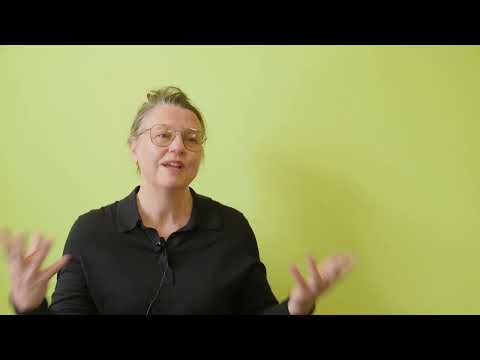
 play video

Assessment criteria

For all BA degree programmes with Art, we look for evidence of the following in your portfolio and/or written statement:

  • a willingness to learn and experiment
  • evolving technical skills in some media
  • an interest in exhibitions and the work of other artists
  • some independent art practice (beyond coursework).

Frequently asked questions

How should I prepare my portfolio if I haven’t studied Art at A level or post-16?

If you have studied other creative subjects such as textiles, photography, film, design, or media, include a selection of work you have produced in these areas, as well as any independent art, design, or craft projects.

To develop your portfolio, you could attend free or subsidised art and making workshops at museums and galleries, particularly those linked to specific exhibitions. You could also explore evening classes in drawing, ceramics, or other creative activities in your local area. These can be a great way to develop your skills and produce new work.

If you studied Art at GCSE level, you might include a few pieces from this, but it is essential to include examples of your more recent work.

Ideas for creating independent work:

  • Create collages using old magazines and other found materials.

  • Use your collages as a starting point for paintings or drawings.

  • Collect packaging from items you have bought or had delivered and use it to create a sculpture.

  • Experiment with applying Mod Roc or papier mâché to your sculptures.

  • Make quick, one-minute sketches of familiar objects. Cut them out and arrange them on a single page, overlapping them to create a collage.

  • Photograph the white shoes you notice over the course of a week.

  • Create a hybrid creature by combining different body parts.

  • Write a poem or choose a text that inspires you and create a piece of work in response to it.

Is there a minimum number of pieces I should include in my portfolio?

There is no set number of pieces to include, and your portfolio can include works in progress.

How do I include contemporary research?

Although your portfolio is primarily a visual presentation, you do not need to include images of work by the artists you reference. Instead, write a short paragraph about the artists or contemporary subject matter that interests you and any exhibitions you have visited. You can include this in either your personal statement or your portfolio.

Questions?

If you have any questions or would like us to be aware of any particular circumstances when reviewing your digital portfolio, please contact the School of Art at the University of Reading by email at fineart@reading.ac.uk or by phone on +44 (0) 118 378 8050.