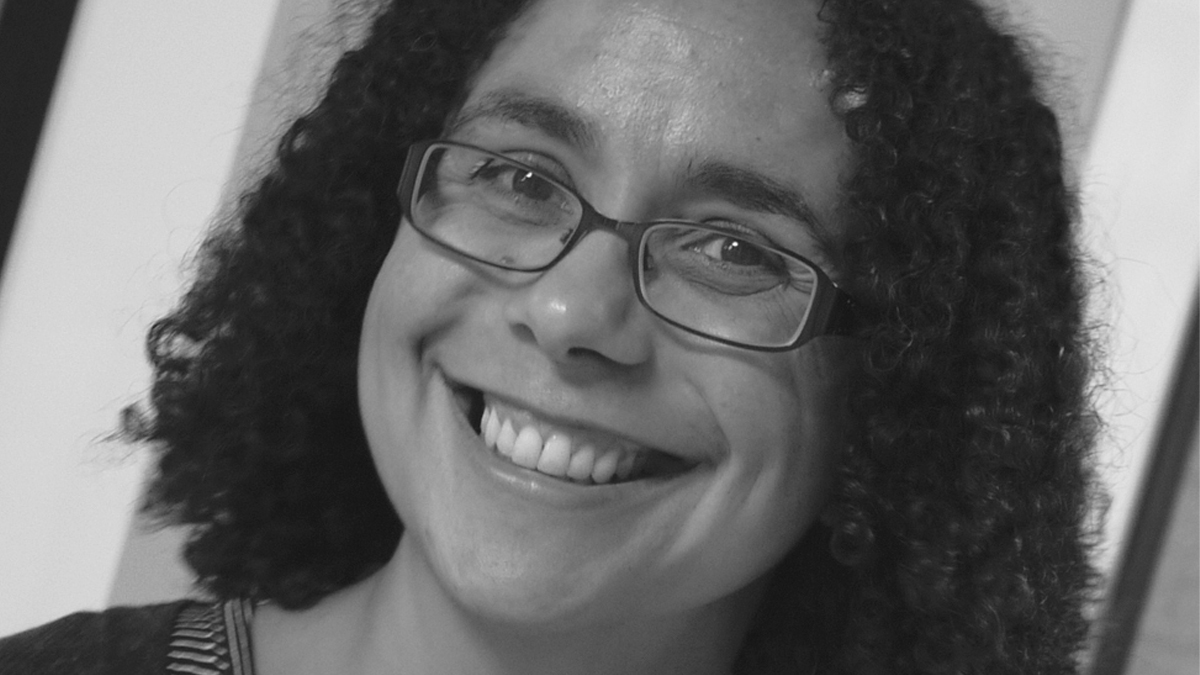
Staff Profile:Dr Katherine Harloe

Name:
Dr Katherine Harloe
Job Title:
Lecturer
Responsibilities:

Parts 2 and 3 Examinations Officer, Study Abroad Officer, School of Humanities Careers Fellow

Office hours (autumn term 2010):

Tuesdays, 11-1

Areas of Interest:

I began (academic) life as a classicist, studying for a B.A. in Literae Humaniores at the University of Oxford.I then went to Cambridge, where I completed an M.Phil. in Political Thought and Intellectual History and a Ph.D. in Philosophy, supervised by Professor Raymond Geuss. Before coming to Reading in autumn 2007 I held post-doctoral fellowships in the Institute of Greece, Rome and the Classical Tradition at the University of Bristol and in the Classics Faculty at Oxford.

My main research specialism is the reception of antiquity in European political thought and intellectual history from the mid-eighteenth to the early twentieth centuries. I am particularly interested in changes in conceptions of the purpose and methods of classical studies since the eighteenth and nineteenth centuries, and the interaction of classical scholarship with other humanities disciplines, with modern culture and society. My main present research project explores the reception of the work of the influential classicist and art historian Johann Joachim Winckelmann during the period 1760-1807, investigating how far his writings were taken by subsequent scholars as offering a paradigm for how to study the ancient world, and examining the strategies those classical scholars influenced by him adopted in order to 'reconstruct' antiquity in the face of the obvious problem of the fragmentary character of their evidence. I have published a number of articles that relate to this project (see below), and am writing up my research as a monograph, Winckelmann and the Invention of Antiquity, which will be published in Oxford University Press's Classical Presences series. My next major research project will be a book on ancient and modern Hellenisms.

Also related to this strand of my research interests is my work on the modern reception ofThucydides. With Prof. Neville Morley (Bristol) and Dr Aleka Lianieri (Athens) I organized three international, AHRC-funded research workshops on this area in autumn 2007. Professor Morley and I are editing the contributions as collection, to be published by Cambridge University Press in 2011/12. I am involved on an ongoing basis in Professor Morley's AHRC-funded major research project on Thucydides: Reception, Reinterpretation and Influence and will contribute a chapter on 'Thucydides and Rhetoric' to the Blackwell Companion to Thucydides edited by Prof. Morley (expected publication 2013).

Working in the exciting and emerging disciplinary area of classical reception studies necessitates engagement with reception theory. A recent foray in this area is my article 'Can political theory provide a model for reception? Max Weber and Hannah Arendt', forthcoming in Cultural Critique 74 (winter 2010), 17-31. I have taken part in a number of initiatives to develop reception theory in relation to classics, including participating in two research workshops on 'Reception and the Political' organized by the Bristol Institute of Greece, Rome and the Classical Tradition and Contexts for Classics, University of Michigan in 2005-7, and delivered the opening paper at the international conference,Classics in the Modern World - a Democratic Turn?, which took place at the Open University in June 2010. You can watch me talking about my take on the 'democratic turn' debate on the Open University's Classics Confidential YouTube channel: http://www.classicsconfidential.co.uk/Classics_Confidential/The_Interviews/Entries/2010/7/19_Debating_Democracy.html'.

A second major strand of my research interests is political and social thought. Since completing my Ph.D., I have pursued this primarily in research on the nineteenth-century classicist and philosopher Friedrich Nietzsche. My paper on 'Metaphysical and Historical Claims in The Birth of Tragedy' appeared in M. Dries, ed., Nietzsche on Time and History (Berlin 2008), and I have a longer-term ambition to write a commentary on Nietzsche's first published work. Thinking about Nietzsche's reception of antiquity has involved me in thinking not only about Thucydides (who was one of Nietzsche's favourite authors) but also Plato, on whom I sometimes teach a Master's-level Special Option at Reading. I also have interests in gender and feminist theory, which I have pursued both in my teaching and in my role as an Executive Committee member of the Society for Women in Philosophy UK between 2006 and 2009.

Finally, I am an enthusiastic amateur in the field of history of science. In 2004-05 I assisted Prof. Nicholas Jardine (Cambridge) and Prof. Alain Segonds (CNRS, Paris) on the British Academy-funded project Conflict and Priority in Early-Modern Astronomy ,which produced new editions and translations of important works in the sixteenth-century plagiarism dispute between the astronomers Tycho Brahe and Nicolaus Reimarus Ursus. My work on this project arose from my association with the Cambridge Latin Therapy Group, a seminar which brings researchers working on scientific instruments with those working on texts in an attempt to profit from collaboration. The results of some of our early researches have recently been re-published in Liba Taub and Frances Willmoth, eds, The Whipple Museum of the History of Science: Instruments and Interpretations (Cambridge 2006). I continue to find the methodological debates and discussions of contemporary historians and philosophers of science of direct relevance to my own research.

Research groups / Centres:

I am a member of the Classical Reception Studies Network and of the Society for Women in Philosophy UK, and of the University of Oxford's Besterman Centre for the Enlightenment. Within Reading I chair the Department of Classics' research grouping in The Classical Tradition and Reception Studies, have contributed to meetings of the Material Text and Modern European Histories and Cultures research themes. I am also pleased to be a member of the new research initiative in the Legacy of Greek Political Thought.

Publications:

Journal articles

'Pausanias as historian in Winckelmann's history', under consideration for Classical Receptions Journal 2.2 (winter 2010: special issue on receptions of Pausanias edited by Jas' Elsner), 174-196.

'Can political theory provide a model for reception? Max Weber and Hannah Arendt', Cultural Critique 74 (winter 2010), 17-31.

'Allusion and ekphrasis in Winckelmann's Paris description of the Apollo Belvedere', Cambridge Classical Journal (Proceedings of the Cambridge Philological Society) 53 (2007), 229-252.

(With N. Jardine) 'Kepler's refutation of Ursus's Demonstratio', Journal for the History of Astronomy xxxvi (2005), 151-65.

Chapters in books

'Ingenium et doctrina. Historicism and the imagination in Winckelmann and Wolf', in P. Hummel, ed., Metaphilology.Histories and Languages of Philology. Paris: Philologicum 2009, 91-116.

'Metaphysical and historical claims in The Birth of Tragedy', in M. Dries, ed., Nietzsche on Time and History: A Collection of Essays, Berlin: De Gruyter 2008, 271-85.

(With N. Jardine, W.E. Poole, K. Tybjerg) 'Darkness visible: obscurity and openness in three mysterious instrument texts' and 'Sending secret messages: Henry Reynolds' Macrolexis', in C. Eagleton, P. Boner, eds, Instruments of Mystery. Cambridge: The Whipple Museum 2004, 5-13, 42-65.

(With C. Eagleton et al.) Instruments of translation (Cambridge: The Whipple Museum 2003).An abridged version is reprinted in in L. Taub, F. Willmoth, eds, The Whipple Museum of the History of Science: Instruments and Interpretations. Cambridge: The Whipple Museum, 2006, 255-82.This jointly authored paper was awarded the Waterman Prize 2003 for the best new work on understanding the Whipple Collection.It is reviewed in British Journal for the History of Science 39.2 (June 2006), 286-7.

Book reviews

P. Bishop, ed., Nietzsche and Antiquity: His Reaction and Response to the Classical Tradition, The German Quarterly, 79.1 (2006), 109-110.

V. Rosenberger, "Die Ideale der Alten." Antikerezeption um 1800,The Classical Review 60.2 (2010), 595-7.

Forthcoming

Winckelmann and the invention of antiquity: history and aesthetics in the age of Altertumswissenschaft, under contract to Oxford University Press, agreed delivery December 2011.

(Co-edited with Neville Morley) Thucydides: reception, reinterpretation, influence, expected publication by Cambridge University Press late 2011/early 2012.

'Thucydides and rhetoric', under contract to N. D. G. Morley, ed., A Companion to the Reception of Thucydides (Wiley-Blackwell), agreed delivery December 2012.

'Translations of seventeenth- and eighteenth-century philosophy' and 'Translations of late eighteenth-century and nineteenth-century philosophy', in L. Venuti, ed., The Oxford History of Literary Translation in English.Volume Five: The Twentieth Century Oxford University Press (expected publication 2011/12).

Review of A. Chaniotis, A. Kuhn, C. Kuhn, eds, Applied Classics: Comparisons, constructs, controversies, for The Classical Review.

Upcoming papers:

You can hear me presenting my research in the academic year 2010-11 at the following external conferences and seminars:

'Reception studies and the history of science', APGRD seminar series 'Reception and its relations', Faculty of Classics, University of Oxford, 22 November 2010.

'The past colonial in eighteenth-century historical and prehistorical narratives of Greece', conference The Past Colonial: Classics and the Colonization of the Past, Yale University, 1-3 April 2011.

'The eighteenth-century invention of antiquity in a disciplinary context', conference on 'Reimagining the Past: Antiquity and Modern Greek Culture', University of Birmingham, 27-28 June 2011.

'Class and the genesis of German aesthetic philhellenism', conference on 'Social Class and Ancient Aesthetics/Literary Criticism' organized by Professor Edith Hall (Royal Holloway) and Professor William Fitzgerald (King's College, London), Institute for Classical Studies, 5-6 July 2011.

Katherine Harloe - profile

Contact Details

Email:
k.c.harloe@reading.ac.uk
Telephone:
+44 (0) 118 378 7942

Page navigation


Search Form

A-Z lists