|
 |
|
|||||||||||||||||||

|
Funded by:
|



Welcome to the website of the Cell Migration lab at the University of Reading.
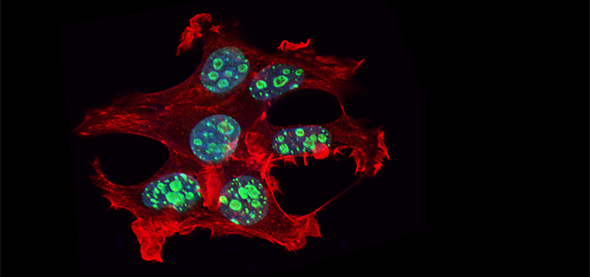
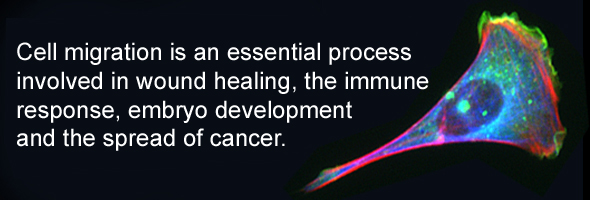
We are interested in how cells move and how this movement, or migration, is controlled. Cell migration is an essential part of many normal biological processes and also many diseases. For example, during an infection cells of the immune system move towards the site of infection and during wound healing cells need to move to the site of injury in order to repair the damage. Cell migration is also important in the spread of cancer and a better understanding of this process is essential for improving the treatment of a wide range of diseases.
We are primarily investigating the regulation of cell migration in cancer metastasis and stem cell migration, but are also interested in how these processes are linked to cardiovascular diseases.
This website aims to provide some information about the work that we do including an introduction to the concepts and principles underlying our research, a more detailed description of the ongoing projects in the lab as well as information on the people in the lab, our publications and collaborations.