|
 |
|
|||||||||||||||||||

|
Funded by:
|



About us
We are based within the Hopkins building, a recently opened biomedical research facility at the University of Reading. Within the new building is a dedicated microscopy suite housing both conventional and confocal microscopes and including a super-resolution N-STORM microscope system. The University also has a Centre for Advanced Microscopy (CFAM), a core facility containing more specialised equipment, including Electron and IR microscopes. In addition, the University has a core Biocentre facility providing full micro-array and proteomic services.
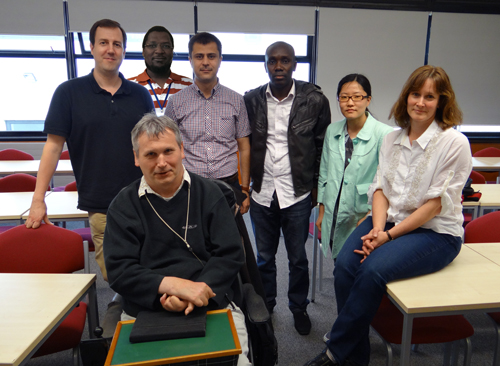

People
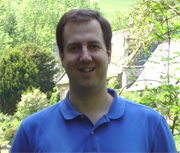 |
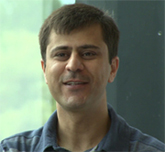
Principal Investigator: Dr Phil Dash. Phil Dash is a Lecturer in Biomedical Science at the School of Biological Sciences, University of Reading. He is also associated with the Institute for Cardiovascular and Metabolic Research and the Reading Systems Biology Network. He received his PhD from the School of Cancer Studies at the University of Birmingham and prior to joining the University of Reading was a post-doc and, later, a British Heart Foundation fellow at St George's, University of London. |
 |
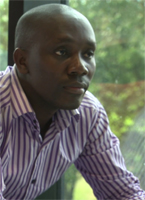
PhD student: Mahmoud Chawsheen. Mahmoud Chawsheen is a PhD student sponsored by the Iraqi government. He joined the lab in October 2011 and is working on a project investigating the regulation of apoptosis in cancer, particularly the role of the Inhibitor of Apoptosis (IAP) proteins and the mTOR signalling pathway. |
 |
PhD student: Godwin Ponuwei. Godwin Ponuwei is a PhD student from Nigeria who joined the lab in January 2012 and is working on a project investigating the regulation of cell migration in cancer, particularly the role of plasma membrane blebbing in cell movement in extracelular matrix. Godwin has an MSc in Cancer Cell & Molecular Biology from the University of Leicester. |
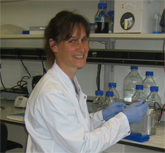 |
PhD student: Shirley Keeton Shirley is a PhD student funded by a BBSRC CASE studentship to investigate the regulation of cell migration by microvesicles. She is also interested in the interaction between cancer cells and the tumour microenvironment and how cancer cells can adapt to their environment and potentially remodel it in order to sucessfully colonize distant sites. Shirley joined the lab in October 2012 and has been awarded degrees from the Open University and the Unversity of Reading. |
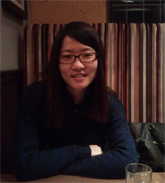 |
PhD student: Kelsey Huang Kelsey is a PhD student investigating the formation of focal adhesions in cancer cells. Focal adhesions are multi-protein complexes that link the cell's rigid cytoskeleton through the plasma membrane to cell surface adhesion molecules such as integrins. Focal adhesions contantly assemble and disassemble in migrating cells and Kelsey is interested in how this process occurs in 3D environments. Kelsey joined the lab in January 2013. |
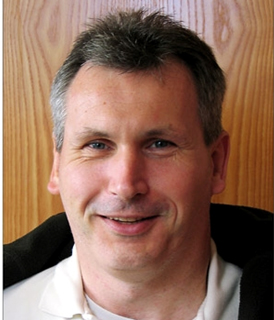 |
PhD student: Jonathan Rudge Jonathan is a PhD student investigating cell signalling networks that control the formation of focal adhesions. Jonathan is taking a systems biology approach to model these signalling networks in order to make predictions about their behaviour in diseases such as cancer. Jonathan was awarded a BSc and an MSc from the Open University. |
Teaching and Research Assistant: Ana Wass
|
PhD student: Dhurgham Al-Fahad
|
PhD student: Khatab Mawlood
|
 |
Post-doc: Henry Collins-Hooper Henry is a BBSRC funded post-doc working in collaboration with Professor Ketan Patel on the regulation of skeletal muscle stem cell migtation in ageing. Henry was awarded both his BSc and his PhD from the University of Reading. |
Previous Lab members
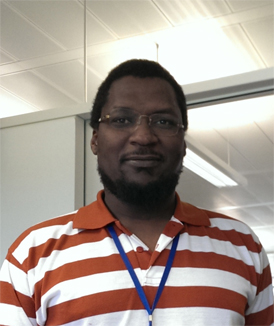 |
PhD student: Ibrahim Barnawi. Ibrahim Barnawi is a PhD student sponsored by the Saudi government. He joined the lab in October 2009 working on a project investigating the role of miRNA in chemotherapy resitstance in cancer. Many cancers are difficult to treat because the cancer cells are resistant to apoptosis. Understanding the mechanisms through which this resistance to cell death is achieved will lead to more effective treatments for cancer. Ibrahim passed his viva in December 2013. |
|