Postgraduate research

We have a large number of active postgraduate research students, currently numbering approximately 50 students spread over the 3 years of our PhD program. We typically win around 5 or 6 studentships per year from the Research Councils, and a similar number of internal University- or Faculty-funded studentships.

You can find out more about the following areas below:

School support for postgraduate research students

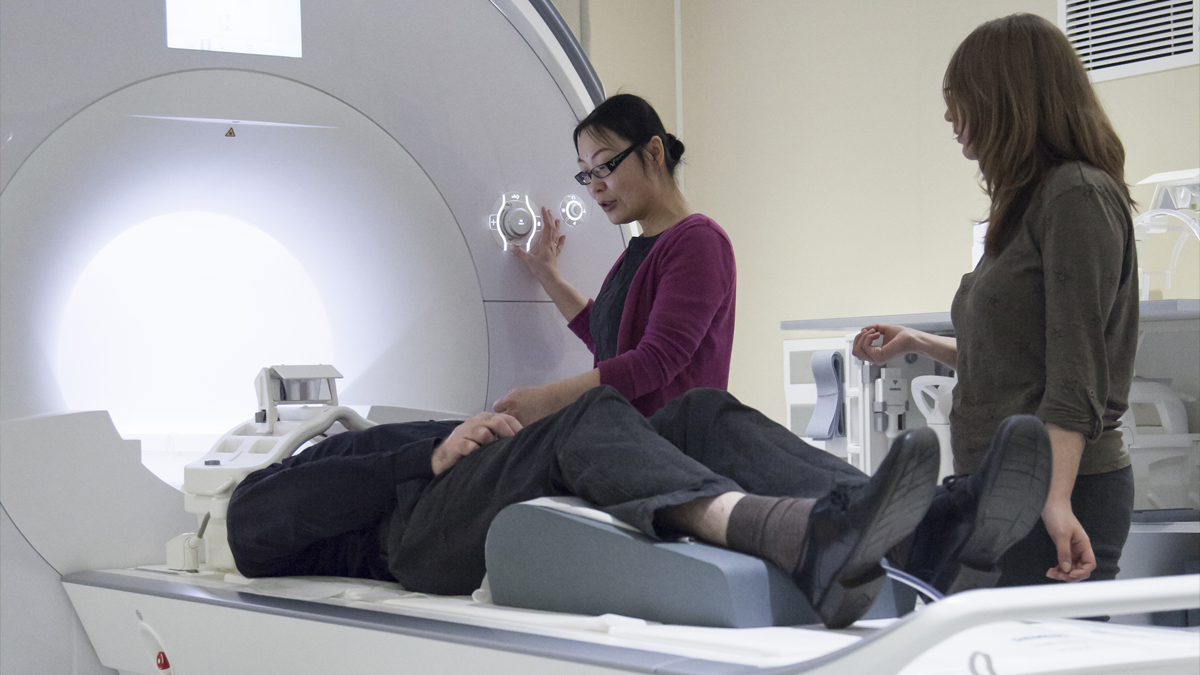
Illuminating researchWe provide a stimulating and supportive environment in which to conduct your research. Our department is housed in new buildings with excellent research facilities. This includes a number of purpose-built laboratories (e.g. EEG.ERP, motor skills, virtual reality, 'babylabs', observation rooms), a high-quality speech booth and a brand new suite of clinical rooms with excellent observation facilities and audio-visual recording equipment. We also have extensive computing and full technical and administrative services. To complement this, our Brain, Behaviour and Health research centre provides facilities to support cutting-edge research into infant development, childhood disorders, healthy ageing and adult disorders. Our School also collaborates with Psychology departments at Royal Holloway, Surrey and Brunel to provide fMRI scanning facilities (housed at Royal Holloway), which are available to researchers from the four departments. We have established links with other University departments including Food Biosciences, Computer Science, Cybernetics, Health & Social Care, Biological Sciences and Pharmacy; as well as with local hospitals, Health Authorities, government research institutes, and national and international businesses. Together these facilities offer an exciting range of research opportunities.

All research postgraduates who are based wholly in the School are allocated appropriate laboratory space, as required, and office space with a desk and storage furniture, together with access to a telephone, photocopying, and other School facilities. New research postgraduates are also assigned a more experienced postgraduate 'buddy' who provides peer support and information, particularly during the first 2-3 weeks. Throughout your research degree, you will be actively encouraged and supported to complete your thesis within 3 years (part-time within 5 years) and to publish and disseminate your research.

Research groups & seminars

Child developmentAll our research students become members of one (or more, as appropriate) of our research groups: Nutrition & Health, Perception & Action, Language & Cognition, Social & Emotional Regulation. These groups hold regular seminars that include discussions of grant proposals, funding opportunities, external research issues and current research issues and findings. All postgraduate students are expected to give a yearly presentation at these meetings. Staff and postgraduates also contribute to twice weekly research seminars. At our internal seminar series, academic staff, post-doctoral staff and research assistants present recent findings and future plans for their research. In their final year of postgraduate research, students are required to give a seminar to this group. We also have an external seminar series, which runs weekly during term-time. In these seminars we have presentations from invited external speakers, all eminent researchers from other UK departments or from overseas and currently visiting the UK. Postgraduates are encouraged to nominate speakers for these seminars.

Graduate schools

All postgraduate research students become members of the Faculty of Science and Life Sciences Graduate School. The Graduate School provides courses throughout the duration of the PhD/MPhil. These courses include generic and transferable skills training, introductory sessions on bibliographic and computing skills, training on teaching skills as well as courses on writing academic papers, preparing for a viva examination and career development. Through the Graduate School, research students will develop and maintain a 'Graduate Student Log'. During the first term of registration, students use a series of self-assessment exercises, to provide a record of skill and learning needs identification and development. Subsequently, students are required to reflect on their current skills ability and plan for skill development in three stages, which broadly correspond to each of the three years of a full-time research programme. Maintaining this log throughout the course of the PhD/MPhil, students detail their attainment of generic research skills linked to progress of work.

The wider research community

Brainscan imagesWe have many active members of the major psychological and linguistic societies on our academic staff and we actively encourage our research students to attend and present their work at major specialist and general conferences, attended by experts in their field. In addition, we encourage our students to attend conferences that are aimed specifically at and for postgraduates, thereby enabling them to meet and learn from their peers. In addition, students organise their own seminars (Postgraduate Research Interest Group), together with postdoctoral staff, to discuss research issues. Students are encouraged to invite staff or external speakers to present seminars on topics of interest (e.g. PhD vivas, postdoctoral research funding).

Supervision and monitoring

Supervisory meetings occur on a regular basis and are adjusted to meet the needs of the student, the project and the year of study. In the first year, full-time students meet with their supervisor at least once every two weeks. In later years a minimum of monthly meetings is prescribed and frequency is adjusted (within this criterion) to allow for high (e.g. design of study) and low (e.g. data collection) periods of guidance. In between regular meetings, supervisors are available on a more ad-hoc basis through laboratory meetings, email, and face-to-face for day-to-day concerns. Support and advice is available from the postgraduate tutors who are responsible for all research students' welfare and progress, recruitment, and selection, in collaboration with the School Research Committee.

The School operates, through the postgraduate tutors acting on behalf of the Research Committee, a monitoring system that is designed to support and promote good supervisory practice throughout a student's registration for a higher degree. It is designed also to ensure timely completion of a research thesis and a high standard of research activity. The overriding aim is to enable our students to emerge, on completion of their thesis, as competent, confident, and skilled researchers. Formal assessment of research progress is achieved through bi-annual written reports (student and supervisors) on supervisory arrangements, research support, and project progress, including drafts of literature reviews and research chapters. All students are allocated 2 'monitors' for the duration of their PhD; these are members of research-active staff with interests that overlap with the PhD programme. They receive the bi-annual reports from the students and supervisors, as well as and provide written feedback to the postgraduate tutors, student and supervisors. Annual interviews with monitors are held in May/June each year and all reports are scrutinised by the postgraduate tutors and Research Committee to ensure satisfactory progress on the project is being made. These rigorous criteria ensure that our students make substantial progress each year and remain on-track to complete within 3 years (or 4-5 years if part-time). In the event of unsatisfactory progress, a clear timetable of required work is provided and followed up by more frequent updates on progress, with feedback from monitors, overseen by the postgraduate tutors and Research Committee.

Our PhD & MPhil degrees

Mortar boardAs a full-time research postgraduate you will undertake studies, with two members of the academic staff as supervisors, in a specified area of psychology or clinical language sciences. Our graduate research training program is designed to assist you and to enable you to develop into a knowledgeable, independent and confident member of the wider research community. This programme is designed to lead to the award of an academic MPhil or PhD. We do not offer either a 'professional doctoral programme' or 'professional postgraduate qualifications' in clinical, educational, or organisational psychology. An academic postgraduate research degree, however, can provide an excellent basis for further training in the above areas of clinical practice.

All students are initially registered for a 'Higher Degree by Research' for the first 18 months of study, and those students wishing to continue onto the PhD program are required to show satisfactory completion of various formal training elements as well as a high standard of research activity.

How to apply

In the first instance, please contact Dr Claire Williams (email PostgradPsyCLS@reading.ac.uk, tel +44 (0)118 378 7540). Please include a copy of your current CV, the names and email addresses of two referees, an indication of whether or not you are seeking funding, and a short outline of your research interests. The postgraduate tutor will be able to direct you towards research-relevant members of staff with whom you can design a suitable research proposal agreeable to both parties. Before contacting a potential supervisor, it is advisable to read their web page(s) and one or two recent research articles.

Admissions criteria

All applicants should have or expect to be awarded a good Honours degree (Upper Second or First class) in Psychology or a related discipline. For overseas students the University takes great care to evaluate the equivalence of qualifications from overseas higher education institutions and non-degree qualifications awarded in the UK.Applicants who have not been educated predominantly in the English language will need to provide evidence that their ability to express themselves in written and spoken English is sufficiently high to enable them to derive full benefit from attending their chosen course.Applicants will therefore normally be expected to have obtained one of the following recognised English Language qualifications by the time they are admitted:

  • IELTS with a score of at least 6.5
  • Cambridge Proficiency in English with a score of at least B
  • TOEFL with a score of at least 600 (paper based) or 250 (computer based)
  • Test of Written English with a score of 5.0

Applicants who have undertaken one or more years of study in higher education which is taught and assessed in English may be considered for exemption from these requirements at the discretion of the University. Applicants who do not meet these requirements may be offered a place on a postgraduate programme conditional on attending a Pre-sessional English language course at Reading.

Research proposal

Microscope & puzzle collageRegistration for a research degree is dependent upon submission of a research proposal.This proposal must be technically feasible, theoretically sound and acceptable to an appropriately qualified member of academic staff. This document should outline the main research questions together with a brief summary of the theoretical and methodological rationale for these. It should outline the primary methodology that you intend to employ and give a preliminary research plan for your first experiment.The exact form of this will depend on the methodology you intend to use and should be discussed with your supervisor.

Admissions process

A formal Application Form should be downloaded and completed.
Your full application to the School must include: a completed application form, references from two relevant referees and a draft research proposal. We aim to provide feedback on your application within eight weeks of receipt. Short-listed applicants will be called for an interview wherever possible with their potential supervisor(s) and the Postgraduate Tutors. The School will make a contribution towards travel expenses in connection with the interview. Alternative arrangements are made for overseas applicants. Please note that due to the timing of (external) decisions regarding the availability of studentship funding, acceptance in the first instance may not include the offer of a studentship. It is, however, likely to include reference to the studentship for which you will be considered. We will keep you informed of progress in this regard.

Things to do now

Discuss your research degree

  • Telephone:
    +44 (0) 118 378 7540
  • Fax:
    +44 (0) 118 378 6715

Page navigation


Search Form