BSc Mathematics and Meteorology
UCAS Code: GF19
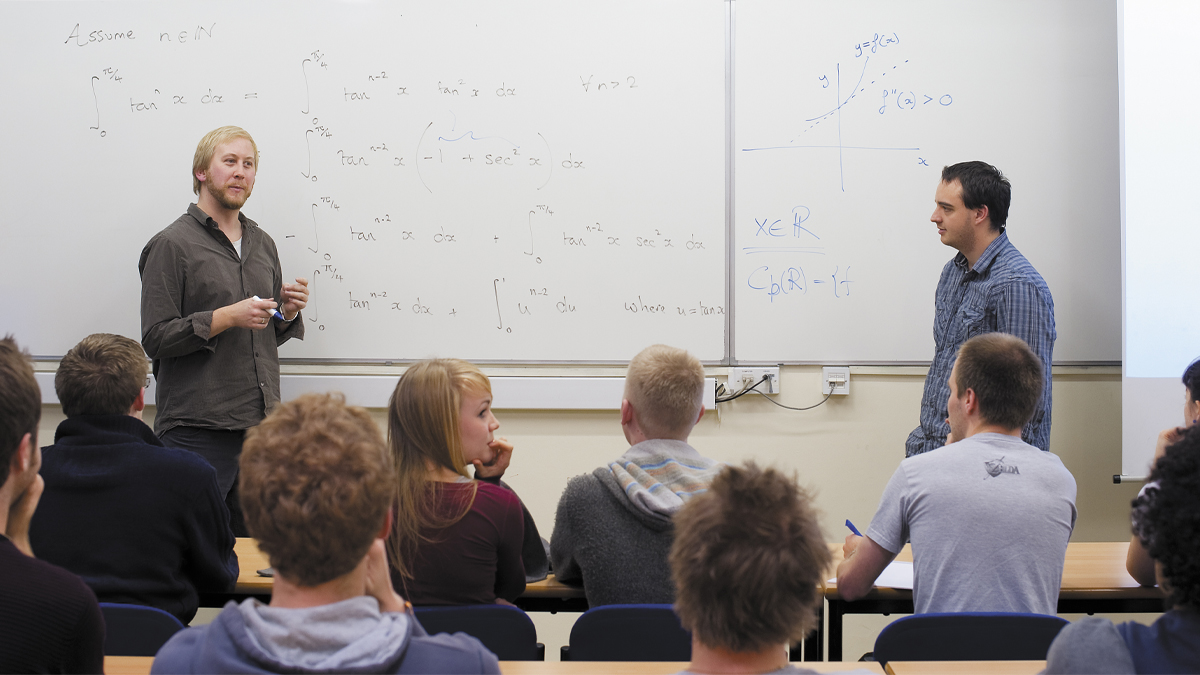
This joint honours course is primarily intended for students who wish to apply mathematical techniques to the understanding of environmental problems. No previous knowledge of meteorology is assumed. The meteorology component contains physical and dynamical meteorology. The mathematical part supplies the theory of numerical methods, together with differential equations (which govern most models of meteorological processes) and underlying ideas such as calculus and analysis. Mathematics and Meteorology students may be considered for a Meteorological Office Scholarship, details of which may be obtained from the Department of Meteorology.
Transferable skills
The University's Strategy for Teaching and Learning has identified a number of generic transferable skills which all students are expected to have developed by the end of their degree programme. By the end of the programme students are expected to have gained experience and show competence in the following transferable skills: IT (word-processing, using standard and mathematics software, spreadsheet and graphical applications programs, scientific programming, internet), scientific writing, oral presentation, team-working, problem-solving, use of library resources, time-management, and career management and planning.
Modules
The BSc Mathematics and Meteorology core modules are:
Year 1
Analysis I
Calculus Methods
Vectors and Matrices
Ordinary Differential Equations I
Introduction to Meteorology
Weather and Climate Fundamentals
Year 2
Analysis II
Ordinary Differential Equations II
Partial Differential Equations I
Numerical Methods
Atmosphere and Ocean Dynamics
Atmospheric Physics
Skills for Graduates
Numerical Methods for Environmental Science
Year 3
Complex Analysis I
Vector Calculus
Part 3 Project
General Studies
Climate Change
The Global Circulation
Optional modules in Year 3 can be chosen from a varied list of mathematics and meteorology topics. More information on the modules we offer can be obtained from the Mathematics and Statistics modules page.
Further information
A full programme specification can be obtained via the main Programme specifications for undergraduate programmes page, which includes further details of the programme structure.
Whilst the University of Reading makes every effort to ensure that the contents and statements made in this publication are fair and accurate, it can accept no liability for omissions, errors or subsequent changes.
The statements made and information provided are a general guide and there may be changes following publication which affect the contents.
Programmes or modules may be altered or withdrawn without notice and assessment arrangements may be changed.