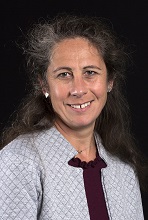
Carol Wagstaff
-
+44 (0) 118 378 5362
-
Research Dean (Agriculture Food & Health)
- Research Dean for Agriculture, Food and Health
- Research England Expanding Excellence in England assessment panel member
- UKRI Technology Missions Fund (TMF) Engineering Biology Mission Hubs panel member
- Programme reviewer for University Putra Malaysia (Horticulture)
- Director of the AgriFood Training Partnership
- REF2021 sub-panel member for UoA6 (Agriculture, Food and Veterinary Science)
- Editorial Board Membership:
- Associate Editor of Annual Plant Reviews Online
- Advisory Board Member for Journal of Experimental Botany
- Editorial Board Member of Journal of Molecular Horticulture
Office
1-35Building location
Harry NurstenAreas of interest
Developing a food system that addresses food inequities, so that everyone can access a culturally appropriate, healthy, sustainable, affordable and enjoyable diet. To improve the quality of horticultural crops, including the nutritional value, appearance, flavour and shelf life, in order to support consumers to make healthy dietary choices.
Research centres and groups
- Member of the Hugh Sinclair Unit for Human Nutrition
- Institute of Food, Nutrition and Health
Current Projects
2023 – 2025. EPSRC Artificial intelligence innovation to accelerate health research call. Advancing machine learning to achieve real-world early detection and personalised disease outcome prediction of inflammatory arthritis. EP/Y019393/1 (PI Weizi Li)
2023 – 2025. UKRI Food Systems Strategic Priority Fund. Additional funding stream for health inequalities. BB/V004905/1
2022 – 2025. UKRI Food Systems Strategic Priority Fund. Increasing UK Dietary Fibre – the case for the great white British loaf. BB/W01792X/1 (PI Marcus Tindall)
2022 – 2026. UKRI Food Systems Strategic Priority Fund. Knowledge Exchange additional fund. BB/V004905/1
2022 – 2026. Hazwan Yahya. PhD funded by Malaysian Government. Reduction of postharvest loss and waste in lettuce.
2021 – 2026. UKRI Food Systems Strategic Priority Fund. Co-production of healthy, sustainable food systems for disadvantaged communities. BB/V004905/1
2020 – 2024. Hannah Case. PhD funded by FoodBioSystems BBSRC DTP. Removing unwanted macro, micro and nanoplastics from fresh produce production. In collaboration with Dr Maya Al Sid Cheikh and Prof Richard Murphy, University of Surrey
2020 – 2023. Manal Moalla Almoraie. PhD funded by King Abdul Aziz University, Saudi Arabia. Effect of pomegranate seed oil on oxidative stress and risk of cardiovascular diseases.
2020 – 2024. Huda Aldossori. PhD funded by King Faisal University, Saudi Arabia. Genetic and biochemical basis of E. coli proliferation on leafy salads.
2020 – 2024. BBSRC AgriFood Training Partnership
Research projects
Completed projects
2020 – 2022. BBSRC Horticulture Quality and Food Loss Network. BB/T010800/1
2020 – 2021. PDRA Dr Onyinye Mason. GCRF (Co-I). Sweet Potato Catalyst Project: Filling critical knowledge gaps for improved food security analysis of under-researched food crops.
2018 – 2023. Nicholas Doddrell. BBSRC CTP PhD with Berry Gardens and NIAB-EMR. Realising increased photosynthetic efficiency to increase strawberry yields.
2018 – 2023. Klara Hajdu. PhD with NIAB-EMR and the UK Hop Association. Hop Breeding for the 21st Century.
2018. PDRA Dr Martin Chadwick. GCRF Rapid Response to support cocoa industry in post-hurricane Dominica
2017 – 2022. Jessica Fostvedt. BBSRC CTP PhD with GreenCell Ltd and University of East Anglia. Understanding the epidemiology of fungal pathogens and their impact on seasonal variation in avocado quality throughout the supply chain.
2017 – 2021. Ana Contente. AHDB PhD. Agronomic and environmental influences on flavour in culinary herbs.
2017 – 2021. Jake Jasper. KTN iCASE PhD with Waitrose. Defining, predicting and delivering ‘fresh’ in the context of leafy salads.
2017 – 2020. BBSRC AgriFood Training Partnership. BB/P023967/1
2017 – 2021. Lucy Turner. BBSRC iCASE PhD with Tozer Seeds. Linking biochemistry and genetics in celery to taste and flavour perceived by consumers: developing a more acceptable product. BB/M016579/1
2017 – 2022. Manik Puranik. Professional Doctorate with AFTP. Towards the development of an Eruca sativa crop with improved nutritional and flavour qualities by investigating the relationship between phytochemical and sensory attributes of breeding lines cultivated in different environments and identification of molecular markers for sugars.
2016 – 2021. Kala Radha. Professional Doctorate with AFTP. Effect of storage temperature, duration and drying technique on the major volatile organic compounds in mango ginger (Curcuma amada Roxb.)
2014 – 2020. Lina Zabaliunaite. Professional Doctorate with AFTP (funded by AB World Foods). Development of fat-free pappadum using high- protein gluten-free pulses through extrusion processing.
2014 – 2020. Andrew Hollingsworth. Professional Doctorate with AFTP (Funded by Leeds Metropolitan University). Future policy options to ensure food security: Developing a sustainability narrative for United Kingdom health professionals.
2017. PDRA Dr Martin Chadwick. AHDB. Agronomic and environmental influences on flavour in culinary herbs.
2016 – 2019. PDRA (Dr Luke Bell and then Dr Martin Chadwick) and research technician (Manik Puranik). BBSRC LINK with Elsoms Seeds and Bakkavor. Smart breeding for salad rocket. BB/N01894X/1
2016 – 2017. Contract research for Science and Advice for Scottish Agriculture. Analysis of glucosinolates in root exudates.
2015 – 2018. PDRA (Dr Martin Chadwick) and research technician (Kala Radha). BBSRC HAPI with Harper Adams University, University of Warwick, Rijk Zwaan, G’s Fresh, Bakkavor. A genetic approach to improving postharvest quality. BB/M017761/1
2015 – 2018. Research Technician (Kala Radha). BBSRC HAPI with University of York, University of Warwick, Harper Adams University, Tozer Seeds. A systems approach to disease resistance against necrotrophic fungal pathogens. BB/M017753/1
2015 – 2018. BBSRC Food Advanced Training Partnership. (Initial award made in 2012 with Richard Frazier as PI)
2015 – 2016. British Council funding to build links with fresh produce industry in Mexico.
2015. CGIAR. Grain Legumes Review for ICRISAT
2015. Business Innovation Voucher FoodWasteNet with Stanswick Farm. Investigating the potential of rapeseed meal for producing high value food ingredients and additives
2014 – 2015. Dr Stella Lignou and Suzanne Bird. Commercial research project with Bakkavor. Developing a blueprint for rocket quality
2014. Dr Emma Bennett. BBSRC Sparking Impact Award. Engagement with industries to model the food supply chain.
2014 – 2018. Bola Oloyede. PhD student funded by the Commonwealth. Effect of diversity of plant varieties and controlled processing on the flavour chemistry of cabbage and their impact on sensory profile and consumer acceptance.
2014 – 2018. Deepa Paliwal. PhD student funded by RETF and Bayer. Aphid killing bacteria: how do they work and how can we utilize them?
2014 – 2015. Dr Rebecca Smith. KTP award with Valley Produce. New product development from fresh herb waste.
2014 – 2015. Contract research for Berryworld. Technologies to improve strawberry fruit quality.
2013 – 2016. Nadia Yahya. PhD student funded by Malaysian Government. Improving microbial quality of fresh rocket leaves.
2013 – 2016. Rashed Alarfaj. PhD student funded by Saudi Arabian Food Agency. Mapping quality traits in strawberry.
2013 – 2016. Antonio Llorente. PhD student funded by East Malling Research/University of Reading. Mapping quality traits in strawberry in relation to water stress.
2013 – 2016. Rajeev Taggar. MPhil student funded by University of Reading/Crops for the Future. Developing genetic resources for underutilised brassica crops.
2013 – 2016. Muhamad Faiz Bin Abdul Rahman. PhD student funded by University of Nottingham/Crops for the Future in Malaysia. Understanding crop domestication.
2013. EFSA Review. (with ADAS and Rothamsted Research) . Review of the strategies for the comprehensive food and feed safety and nutritional assessment of GM plants per se. EFSA supporting publication 2013:EN-480, 115 pp.
2012 – 2016. Chelsea Snell. DTP PhD student (joint between Reading and Nottingham DTPs). The role of ARR22 in Brassica.
2012 – 2016. Luke Bell. PhD student funded by BBSRC CASE/Bakkavor/Elsoms Seeds. BB/J012629/1
2011 – 2013. Dr Laura Atkinson. Leverhulme Trust. Identifying targets for improving the nutritional content of cruciferous crops.
2011 – 2015. Kala Radha. Technician funded by VHB Herbs. Laboratory technician and trials manager.
2011 – 2014. Louise Birse. PhD student funded by RETF/SCRI. Transcriptome analysis of enterohaemorrhagic Escherichia coli in planta.
2011 – 2014. Halala Abdulfattah. PhD student funded by Kurdistani studentship. The impact of MAP on apple quality.
2011. Contract research for MacTavish Consulting Ltd and VHB Herbs
2010 – 2012. Dr Ascension Martinez Sanchez. Postdoctoral fellow funded by Spanish Government. Quantitative genetic analysis of nutritional traits in lettuce.
2010 – 2015. Dr Laura Graham. Postdoctoral visiting scientist funded by R&G Herbs. New product development for herbs.
2010 – 2014. Iffah Hazirah Bt. Mohd Nawi. PhD student funded by Malaysian Government. The role of ARR22 in seed resource accumulation and wound response.
2010. Access to EU Life Science Trace Gas Facility, Nijmegen.
2009 – 2013. Emma Bennett. PhD student funded by RETF/Tozer Seeds/University of Nottingham. Resource allocation in Arabidopsis and Brassica crops.
2009 – 2014. Martin Chadwick. PhD student funded by BBSRC/Tozer Seeds. Quantitative and qualitative assessment of bitterness in lettuce. BB/G017670/1
2009 – 2013. Ditte Hobbs. PhD student funded by RETF/Eccentricities. The impact of beetroot consumption on cardiovascular health.
2008 – 2012. Benjamin Cruickshank. PhD student funded by RETF/R&G Herbs. Improving the quality of cut fresh herbs using optimised pre-harvest cultivation conditions.
2008 – 2010. KTP award with R&G Fresh Herb Solutions.
Academic qualifications
- DPhil, University of York, Department of Biology, Gravitropic perception, signal transduction and response in Tradescantia fluminensis and Arabidopsis thaliana,1995-1998
- BSc Biology, Royal Holloway & Bedford New College, University of London, 1992-1995.